
Middle Eastern Gray Scale
On Arabs, Jews, and the complicated art of living together

People from the outside often try to simplify life in Israel. You can see it on social media, where everything is regularly squeezed into neat black-and-white categories. Victims and villains. Good guys and bad guys. But if there is one color that truly dominates this Middle Eastern canvas, it is gray.
The unglamorous, complicated kind. Inside that gray lives a kind of coexistence most people never notice, one that refuses to fit into any prepackaged narrative.
Take Aya, for example, the Muslim pharmacist who runs the pharmacy at my HMO. While the screens outside scream and demand you pick a side, Aya stands behind the counter, smiling and listening. Her customers (often elderly Jewish men and women, worried, frustrated, or simply in pain) find in her something that sometimes feels closer to a therapist than a pharmacist.
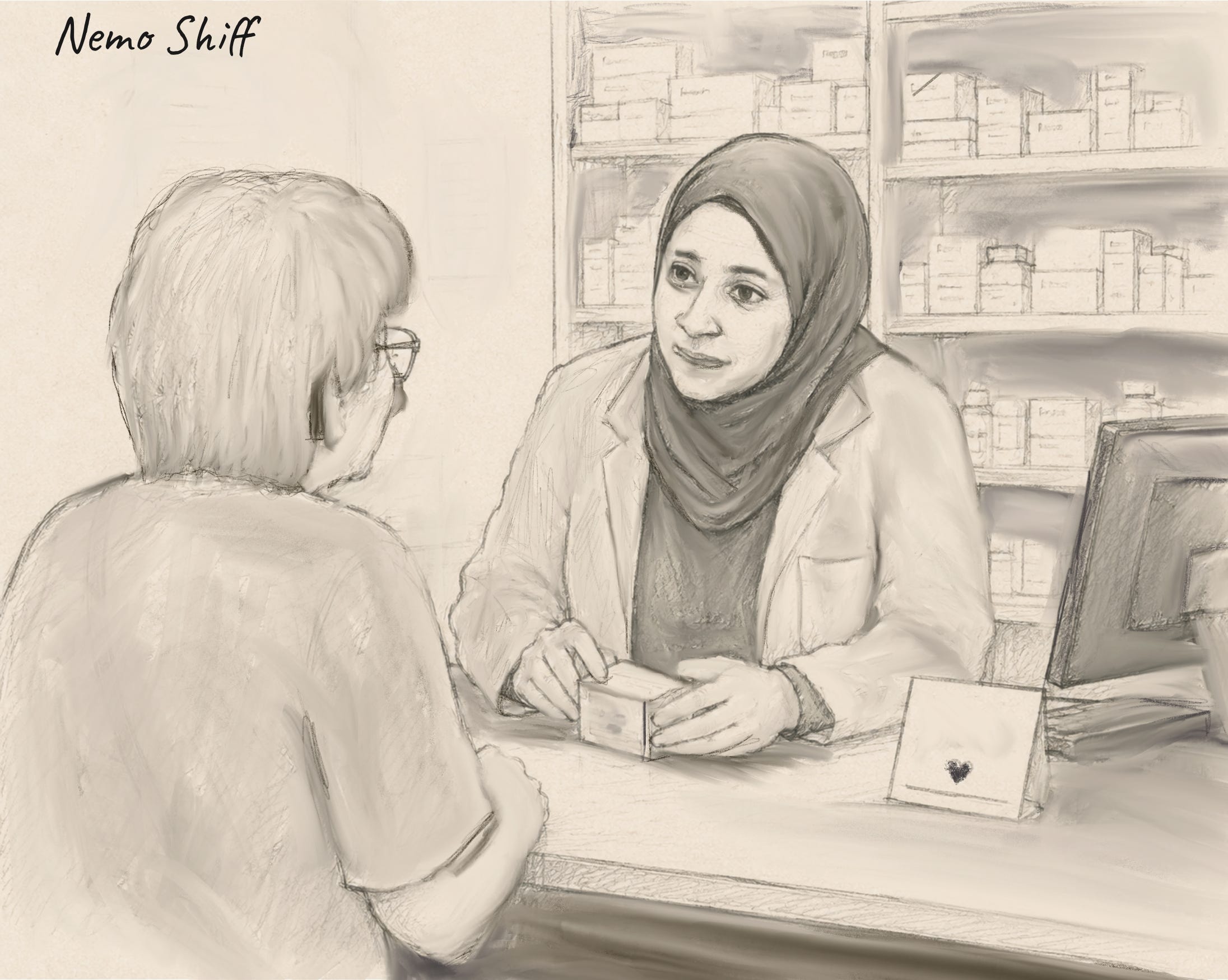
Do you see what I mean? Our reality doesn’t wait for political agreements or historic handshakes. It happens right there, in line for antibiotics. And if Aya is just one brushstroke in this canvas, the picture extends far beyond a single pharmacy counter.
Since 1948, the Arab population in Israel has grown from a small minority of about 156,000 to nearly two million citizens today. In a country of roughly ten million, that means one thing: our lives don’t just intersect, they overlap, collide, and occasionally merge into one long, chaotic queue. You can see it everywhere. Arab representation in medicine, law, construction, business management, accounting… Just pick a field, and you’ll find it.
Even in the hallways of the Hebrew University, you’ll hear fluent Arabic echoing through classrooms. And why Arabic and not Hebrew? For Israeli Arabs, Hebrew is a second language. Not everyone speaks it comfortably, and not everyone feels equally at home using it.
And sometimes, those language gaps follow people into my everyday life. Luba, my wife, who works in HR, complains about this at least twice a week.“How am I supposed to onboard someone if we can’t even communicate?” she sighs. And I nod sympathetically, without any real ability to help.
Yes, Hebrew is a key to professional and academic integration. But there can also be a sense of alienation attached to it, a feeling that the language isn’t entirely theirs. I’ve run into this myself in social situations where the clear preference was Arabic, simply because it’s the language where most Israeli Arabs feel most like themselves.
And switching between languages? More than once, I’ve recognized an Arabic accent and, instead of answering in Hebrew, I’ve blurted out my embarrassingly basic, elementary-school Arabic. And instantly, the entire atmosphere shifts. People smile. They open up. They laugh at my accent, sometimes loudly, and with good reason. In that tiny moment, language stops being a wall and becomes something else entirely: just an icebreaker.
But not every shade finds its place so easily on the canvas.
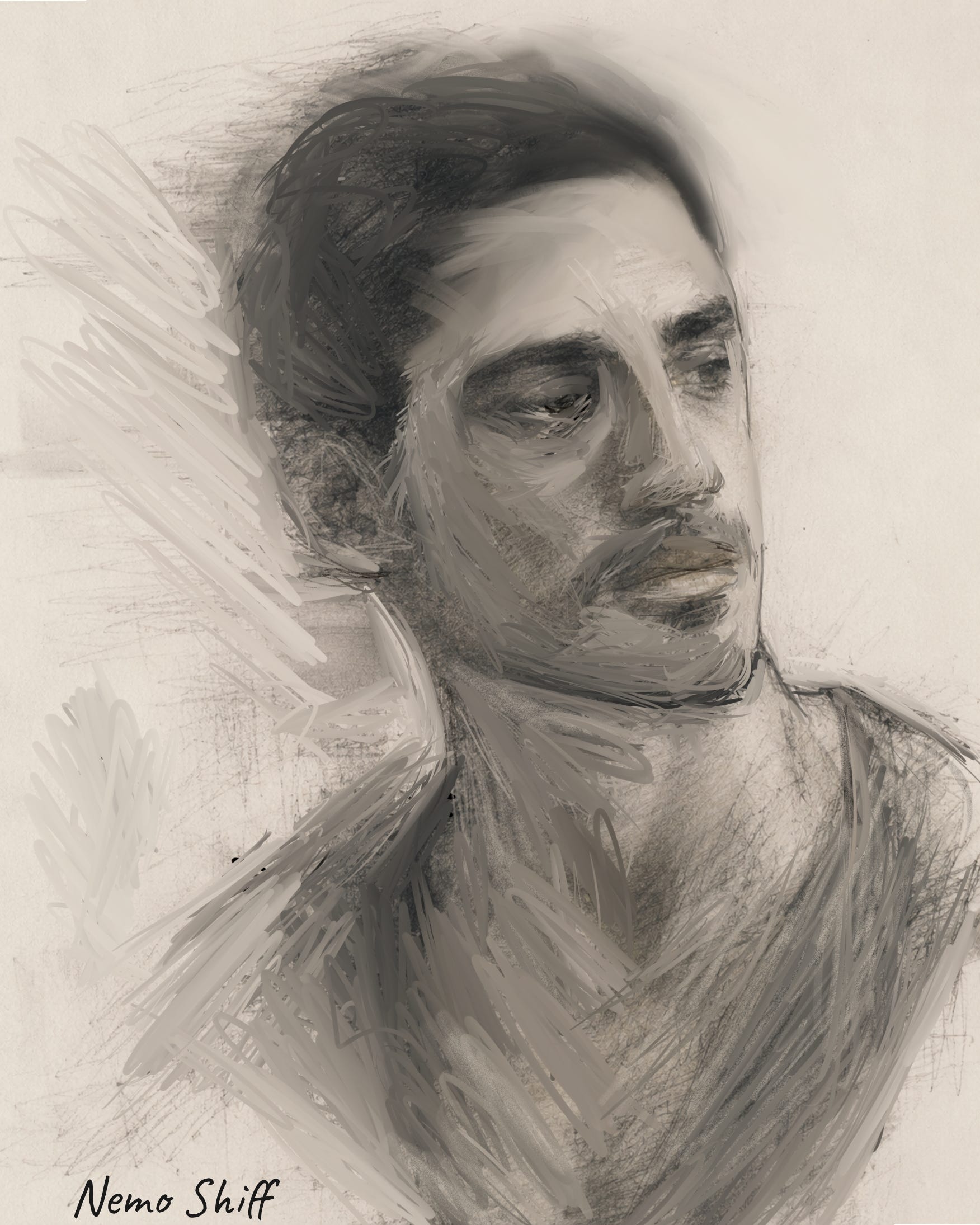
In my first workplace, about twenty‑five years ago, I had a friend named Hassan. Hassan lived in a kind of total disconnection from his Arab identity… as if he were trying to shed it altogether.
He dated only Jewish women, always the ones with the most European look he could find, blonde, fair-skinned, as far from the Middle East as possible. To me, it always felt like he was searching for proof that he was “one of us,” whatever that even means in this identity game.
The last time I saw him, that conflict had evolved into something else entirely. He had left Jaffa. And he was introducing himself by a new name: Assi. The story of Hassan‑turned‑Assi has stayed with me all these years because it exposes the hidden cost of identity politics here.
He never shared much, so to this day I don’t really know what he was going through. Maybe he was running from something. Maybe he was searching for something. Or maybe he simply wanted the freedom to reinvent himself. Honestly, I don’t know.
Now, twenty-five years later, I still have more questions than answers. What I do know is that whenever I think about Hassan, I find myself wondering how many people in our world spend their lives trying to choose between belonging and being themselves.
And Hassan was not the last person who made me question the black-and-white way we often color reality. And that’s part of living here. Life has a habit of blurring even the sharpest lines. Like in times of security tension, the sound of Arabic can trigger an automatic alarm bell for many Jewish Israelis, especially during periods of violent unrest, like in 2000 or in May 2021.
The scale of violence in mixed cities and on the roads in May 2021 was unprecedented. For the first time, synagogues and properties were burned, major traffic arteries were blocked, and lynchings were carried out against civilians. It was a moment when suspicion didn’t just rise. It skyrocketed. I remember that month vividly; for me, it was one of those moments when I had to re-examine the reality I thought I understood.
But reality here has a habit of flipping itself inside out without warning. Just one month later, in June 2021, under the Bennett–Lapid government, an Arab party joined the governing coalition for the first time in Israel’s political history. A moment of political acrobatics that shattered the assumptions of both sides. It’s a reminder that here, the ground can shake beneath your feet and then rearrange itself into something entirely new.
And then came October 7th, mixing the colors all over again.
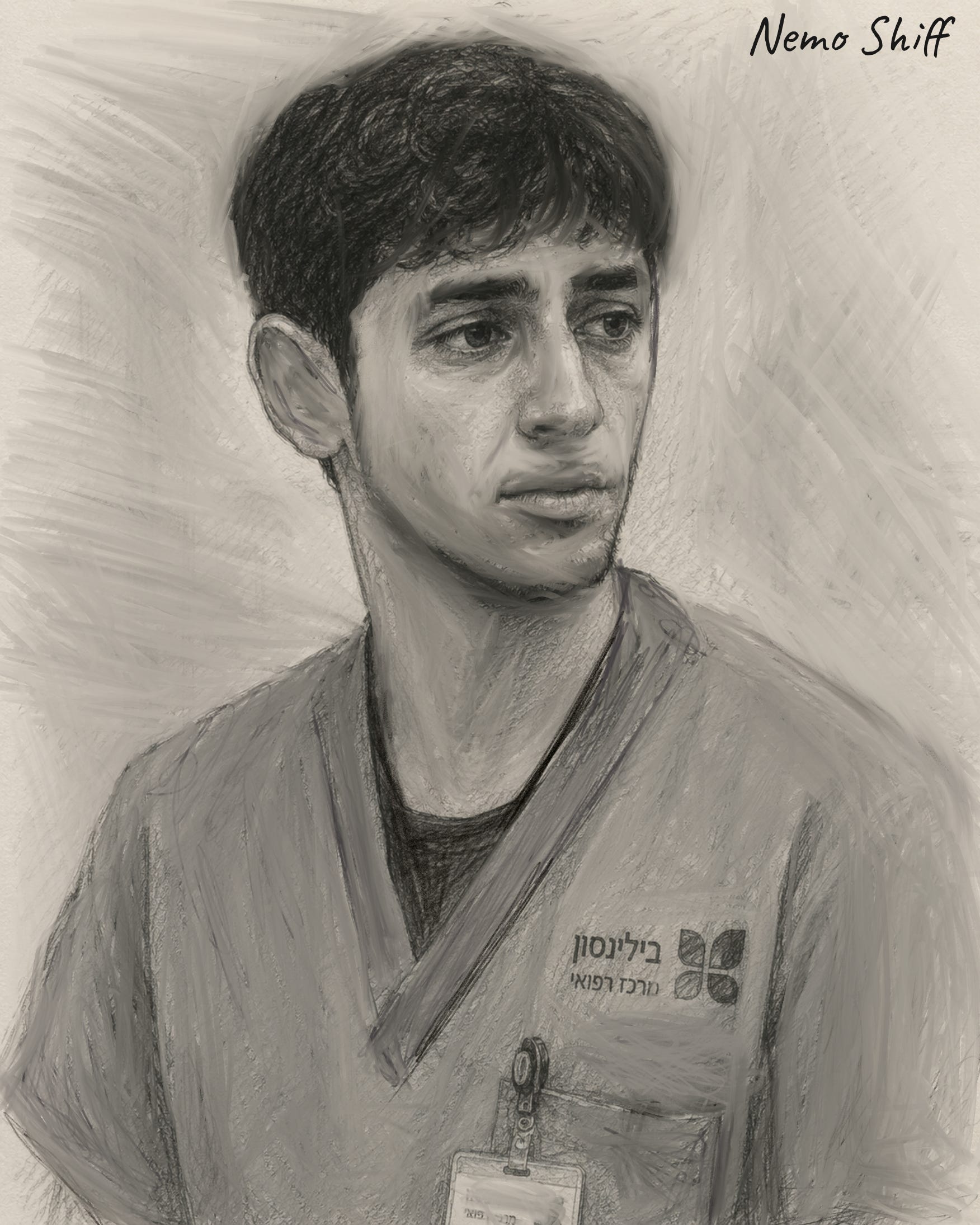
About six months ago, my wife was hospitalized at Beilinson with an infection. In the hospital room, while I sat beside her bed, we found ourselves talking about the never‑ending war. With us in the room was a young Arab intern who came in to draw her blood.
At first, he stayed quiet, listening from the sidelines. Then, suddenly, he paused. Something changed. Perhaps something in the conversation made him feel safe enough to speak.
He told us that the day after the massacre, he went south. He volunteered to help evacuate bodies and treat the wounded in Nir Oz and Kfar Aza. He admitted that he volunteered partly because he doubted the reports; he needed to see it with his own eyes. And there, confronted with those horrors, he was shaken to his core.
It was his first time in a war zone. While he and the ZAKA teams were removing bodies from the burned houses, Hamas gunmen opened fire on them. Under that fire, searching for bodies while trying to stay alive, something inside him cracked.
“After the shooting and those scenes,” he told us quietly, “I realized everything here had spun out of control. After what I saw, I lost all faith in their cause. Human beings don’t behave like that.” His words still echo in my mind.
Reality here shifts at a pace no one can predict. Sometimes it breaks apart, and sometimes, unexpectedly, it stitches itself back together in the most unlikely places. And maybe that’s the hardest thing to explain to people on the outside.
That on the very same day, you can fear each other, laugh with each other, work side by side, argue, feel like total strangers, and… pour your heart out to Aya at the pharmacy.
Because life here never really fits into the neat categories invented for it. It happens between people. Between languages. Between traumas. Between fears. And in those small moments when someone chooses to see the human being in front of them before they see the identity.
And that’s why, at least from where I stand, the color that dominates this Middle Eastern canvas will always remain gray.
Nemo
If these stories resonate with you, consider supporting Noted by Nemo on Ko-fi.
Thank you for this, Nemo. I hadn’t been aware of the turmoil you described, in 2021. In fact, I hadn’t paid much attention to the going’s on in Israel since my dad passed, in 2002. It took an event of the 10/7 magnitude to shake me out of my comfort zone.
But I’m intrigued by the greys you describe. I want to meet the people you share with us…Aya the pharmacist, the young intern who saw the unthinkable. This brings me hope for a kinder future…when we can finally “turn our swords into plowshares…”
🙏🕊️💜
Our friend is chemistry professor in Israel and majority of his students are Arabs. After graduation, some of them became his good friends.