
Taking The Long Way Home
On why the Jewish People Spent Millennia Packing, Unpacking, and Finally Boarding the Boat

The existence of Judaism in the Diaspora and the unbreakable thread that connects it to Israel constitute a unique phenomenon in human history. It is not a physical connection. It’s more like a web. A web of memory, rituals, arguments, traditions, longing, survival mechanisms, and shared stories carried across continents for thousands of years.
And yet, in recent years, we have witnessed various attempts, some gentle, some less so, to sever this cord. To free Judaism from the idea of Israel, or Israel from the idea of Judaism, as if they were two devices that were accidentally stuck together.
This is why. This time, I chose to dive into this connection. Not to resolve it (it does not want to be resolved), but to understand how this historical relationship was created and why it refuses to disappear, even when it could have been much more convenient for some.
Around 2,600 years ago, following the destruction of the First Temple, the Jewish people began their long expulsion from their land into the wider world. This period became known as the Babylonian exile, and it did not merely scatter the Jews from Judea; it forced them to redefine who they were.
In many ways, it reinvented Jewish space itself. Suddenly, without the Temple, without sovereignty, and without a kingdom of their own, a portable Judaism had to be built. A compact, easy-to-carry version, one that would not collapse every time its people move between borders.
After roughly seventy years, some of those Jews returned to the land and rebuilt Jewish life there.
But this period, too, eventually ended in destruction and exile under Roman rule.
The Babylonian exile may have redesigned Judaism.
The Roman exile turned it into a long-term survival system.
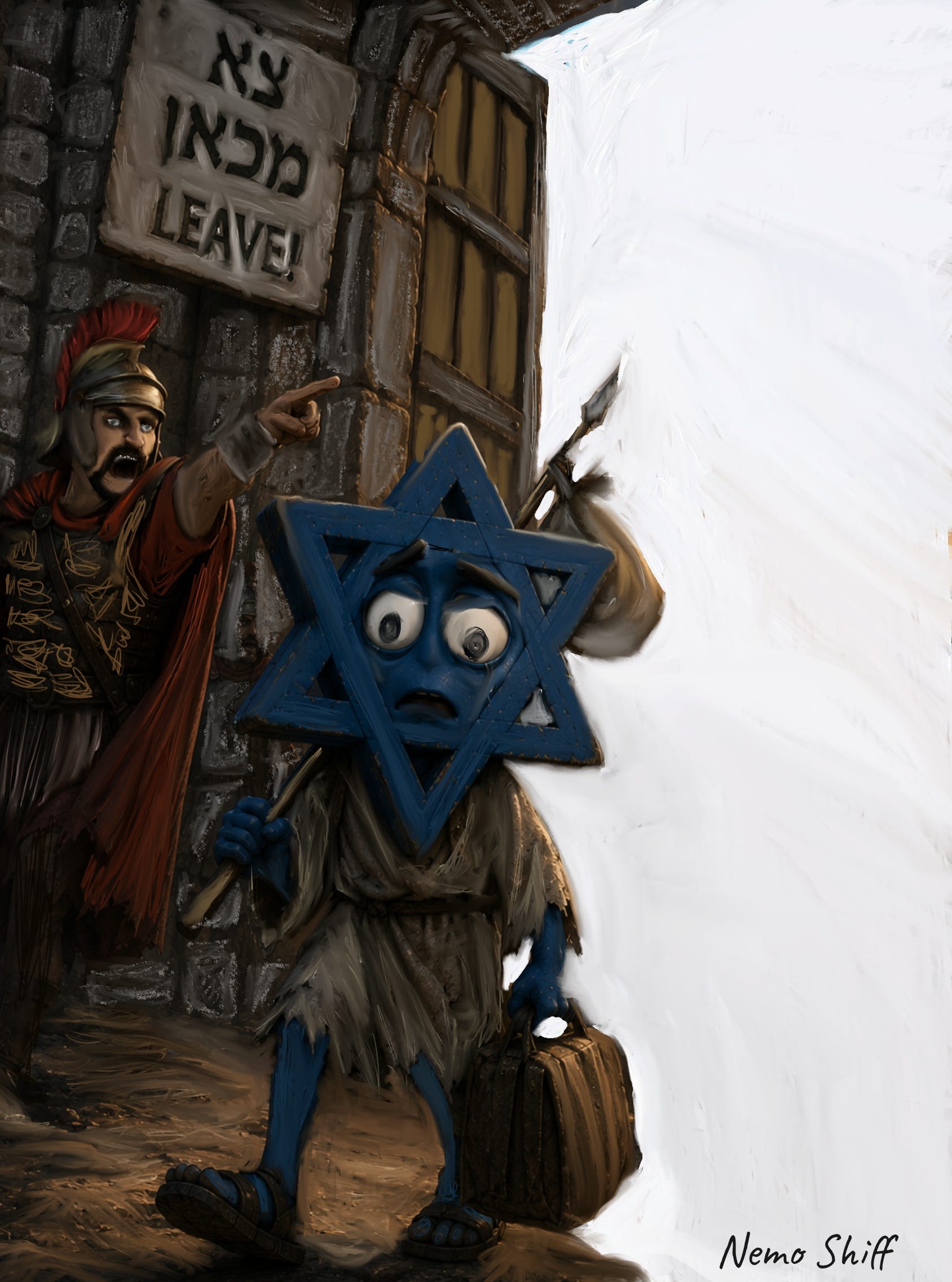
And so, little by little, over centuries, the hills, valleys, and settlements that connected the provinces of Biblical Israel were replaced by new institutions: The synagogue, the Beit Midrash, the Mikveh HaTahara, the Beit Tamchoi, and the cemetery.
These institutions formed an invisible web connecting communities scattered across continents from North Africa to Eastern Europe, from Yemen to Spain, allowing a civilization without a central territory to continue functioning long after many empires around it disappeared.
And so Diaspora Judaism was born, not as a glitch, but as a creative solution to a new reality. A solution that endured, sometimes out of stubbornness, sometimes out of genius, and sometimes simply because there was no choice.
Part of what held this web together was Jewish faith. This was like glue, or, to be precise, super glue. It not only kept the scattered Jewish communities united, but it also created a clear distinction from their environment. In a world where everyone was trying to assimilate, the Jews chose the opposite: to stand out. Not always willingly, but certainly consistently.
And woven deep into that belief was always the longing for Zion. The biblical Zion, the mystical Zion, the Zion of Jerusalem above and Jerusalem below, the Zion of “Next Year in Jerusalem” and “if I forget you.”
It appeared in prayers, customs, songs, blessings, and even in places you wouldn’t expect- like in the blessing of food, as if someone were saying: “Have we eaten? Good. Now let’s mention Jerusalem, so that no one forgets where we came from.”
Sometimes it was subtle, sometimes it was downright obsessive. Communities that lived thousands of kilometers from the area, without passports, without maps, and with no realistic chance of getting there, continued to talk about Israel as if it were just around the corner.
They built entire lives around a longing for a place most of them had never seen. And here arises the inevitable question, the one that hovers over this whole story like a giant footnote: If the Jewish people are so attached to the land, why haven’t they returned to it for 2,000 years?
The answer to that paradox
1. The religious level
Many saw exile as a punishment. Not a small punishment but a collective punishment, one that comes with instructions: “Sit still, wait for the Messiah, and don’t try to shorten the processes.”
To this day, there are sects in Judaism that hold to this view, some are quite extreme, who believe that any attempt to return to the land before the heavens send the message “the time has come” is offensive towards God.
2. The geopolitical plane
Even if someone wanted to return, the region wasn’t exactly waiting for them with a red carpet. For two thousand years, Israel passed from hand to hand like a problematic rental apartment: Romans, Byzantines, Crusaders, Mamluks, Ottomans.
And most of them weren’t enthusiastic about Jewish immigration. Some banned it, some taxed it, and some didn’t want any more tenants. In short, it was not easy to “return home” when every time there was a new landlord who preferred you to stay abroad.
3. The physical barrier
Even if you ignored religion and politics, the reality remained. By the end of the Ottoman period, the Land of Israel was a neglected province, full of swamps, malaria, and an economic wasteland. The journey there took months, cost a fortune, and included a good chance of dying on the way- from robbers, weather, or diseases.
4. The social plane
In the meantime, the diaspora became a home. Jewish communities grew, established themselves, and even built institutions. They created a whole life, sometimes prosperous, sometimes threatened, but a life. And when you have a community, tradition, livelihood, and children in school, it’s hard to just get up and go. The longing remains, but the reality… is more comfortable than it is comfortable to admit.
And yet, there have always been those who have not accepted the paradox. In every generation, Jews have risen, those who have looked at reality, at the risks, at the barriers, at common sense -and said: “It doesn’t matter. We’re going.” They were the minority. Sometimes a minority within a minority. But they were always there.
And who were these immigrants?
For the most part, a spiritual elite. Not people looking for a career, or affordable housing, or a beach. But Kabbalists, Torah scholars, and community leaders. People who decided that the best way to advance redemption was simply… to start it themselves.
One of the most remarkable examples was in the 16th century, when exiles from Spain arrived in Safed and established a spiritual and economic empire there. They built an industry, wrote Kabbalah, and turned the city into a veritable spiritual laboratory.
Earlier movements existed as well.
One of the most famous was the migration known as the “Aliyah of the Three Hundred Rabbis” in the early 13th century. This happened after Saladin defeated the Crusaders and captured Jerusalem, but the Crusaders still held large parts of the country.
These Jews recognized the geopolitical cracks and jumped at the opportunity. They immigrated to renew the settlement, build communities, and act as if the Crusaders were just another temporary occupier passing through by mistake.
Until the 19th century, the Return to Zion was seen almost entirely as a religious act. Not a national project, not a political movement- but a spiritual experience. Then things changed.

In the mid-19th century, this idea of returning to Zion was secularized. What caused this change? In one word: Europe. In two words: Europe was disappointed.
The plight of Jews in Eastern Europe because of pogroms, discriminatory laws, and raw anti-Semitism, together with the rise of hatred in Arab countries as well, shattered the illusion of emancipation. The illusion that said: “Be good citizens, dress the same, behave nicely, and… they’ll accept you.”
Well… they didn’t.
Jewish thinkers began to understand that this model was not working. It was impossible to continue to believe that the Diaspora would solve itself. And out of this understanding, out of crisis, despair, and frustration - Zionism arose.
In many ways, Zionism was revolutionary precisely because it rebelled against the passivity of exile. It took ancient religious longing and translated it into the language of 19th-century Europe: nationalism, self-determination, political organization, labor movements, newspapers, congresses, and eventually statehood.
If Zionism had once been only one option among several possible futures for the Jewish people, the Holocaust transformed it into something far more urgent. The Holocaust was not only the largest genocide in modern history, but also a profound rupture in Jewish life.
This event turned all the old assumptions to dust. It all collapsed, almost in an instant. And there was another historical irony hidden inside all of this.
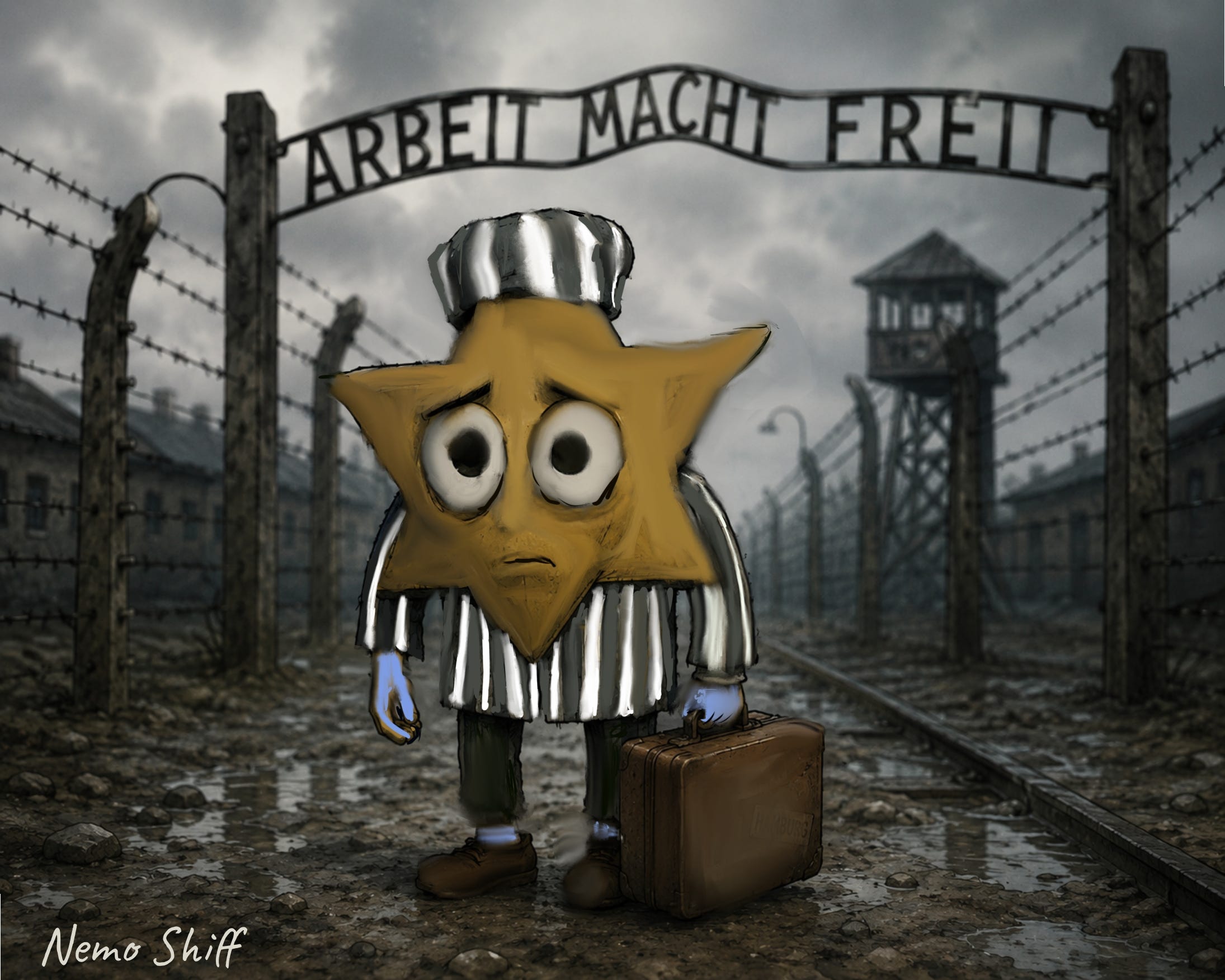
For generations, Europeans had used the word “Palestine” mockingly when speaking to Jews: “You do not belong here. You are foreigners. Go back to Palestine.” It was a phrase that was repeated over and over again, from the church, from the nobility, from the street, from academia. The Jews heard it so often that it became background noise.
Then, after World War II, the remnant of the Jewish people did exactly what they had been told for generations: They boarded rickety ships, sometimes without documents, without money, without family, and returned home. This time, not out of ideology. Not out of romance. But out of a simple, almost biological understanding: That there was no other place.
It is important to remember: the State of Israel did not arise only from the survivors of Europe. The story is much broader, much older, and much more… Middle Eastern.
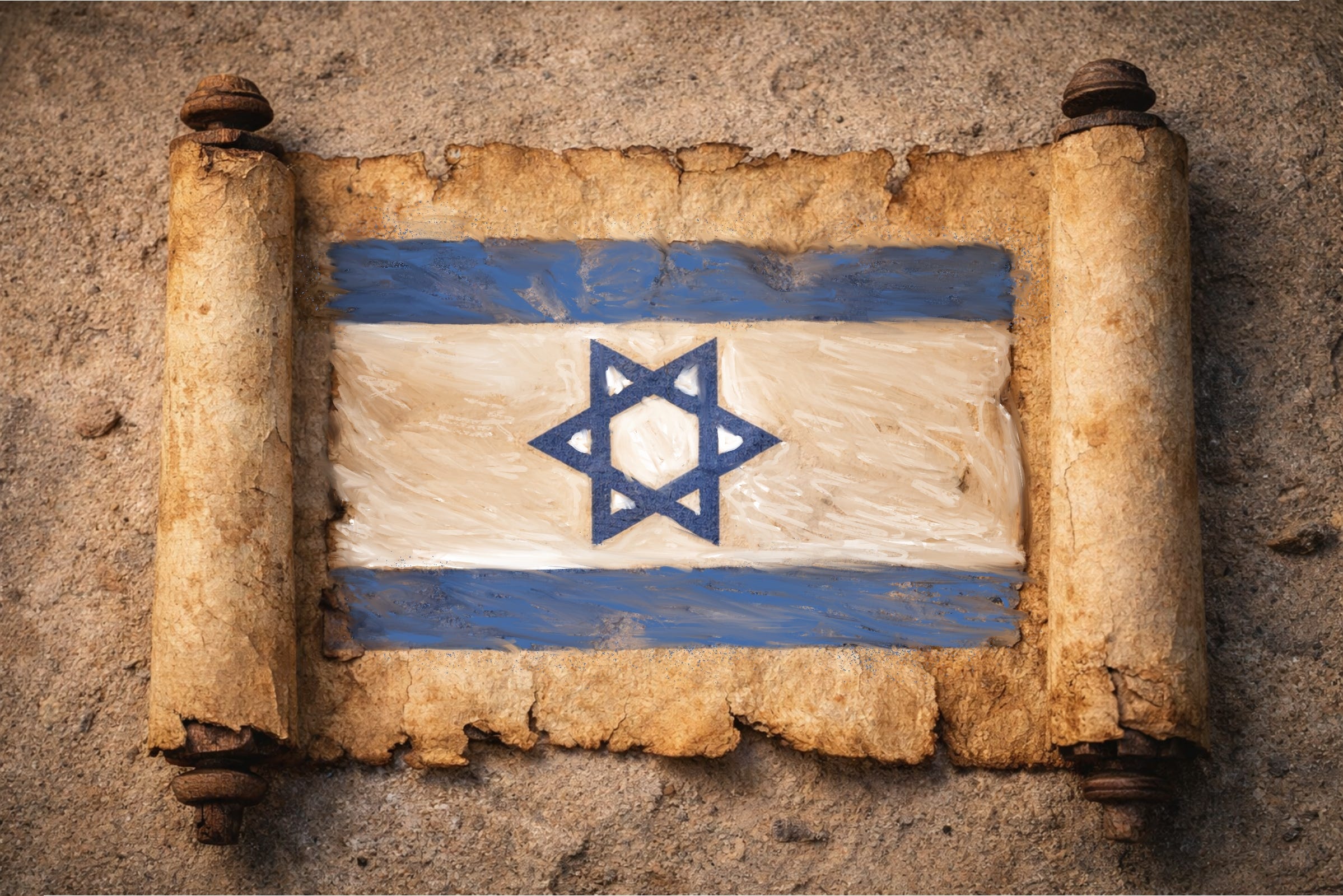
Immediately upon the establishment of the state, hundreds of thousands of Jews from Arab and Islamic countries began to flow into it, entire communities that carried with them two thousand-year-old traditions. Among them were also the direct descendants of those Jews who had remained in Babylon (Iraq) since the destruction of the First Temple.
They did not come from a written and reasoned Zionist ideology. They came because reality urged them on: pogroms, violence, insecurity, and the understanding that the world around them was changing rapidly. In many ways, history had completed a full circle.
And all the ancient traditions, the synagogues, the piyyutim, the Hebrew language that lives in their prayers, the holidays and customs, all of these became an inseparable part of the new-old Israeli culture.
Israel became a place where two great rivers of Jewish history, Europe and the East, met again. Later, they were joined by Jews from Asia and Africa. Not always in harmony, not always without friction, but in a real, deep connection that continues to shape Israeli identity to this day.
Nemo
Supporting this publication on Ko-fi is probably easier than crossing the Ottoman Empire on foot to reach Jerusalem. ☕
There’s a quiet truth in the way distance reshapes what we call home. It stops being a fixed place and becomes something more fluid,an accumulation of memory, absence, and return. Perhaps we never truly leave home; we only learn to carry it differently.
You’re a magnificent storyteller, Nemo. I take such joy from reading and learning. Thank you~
Have you eaten yet? Good. Let’s talk about Jerusalem. I really enjoyed that!